Inside SpaceX's Software Architecture: Tech Stack, Redundancy, and How They Build Fault-Tolerant Code
A deep technical breakdown of the SpaceX software stack, flight computer architecture, triple modular redundancy, Chromium in Crew Dragon, and resilience lessons for web engineers.
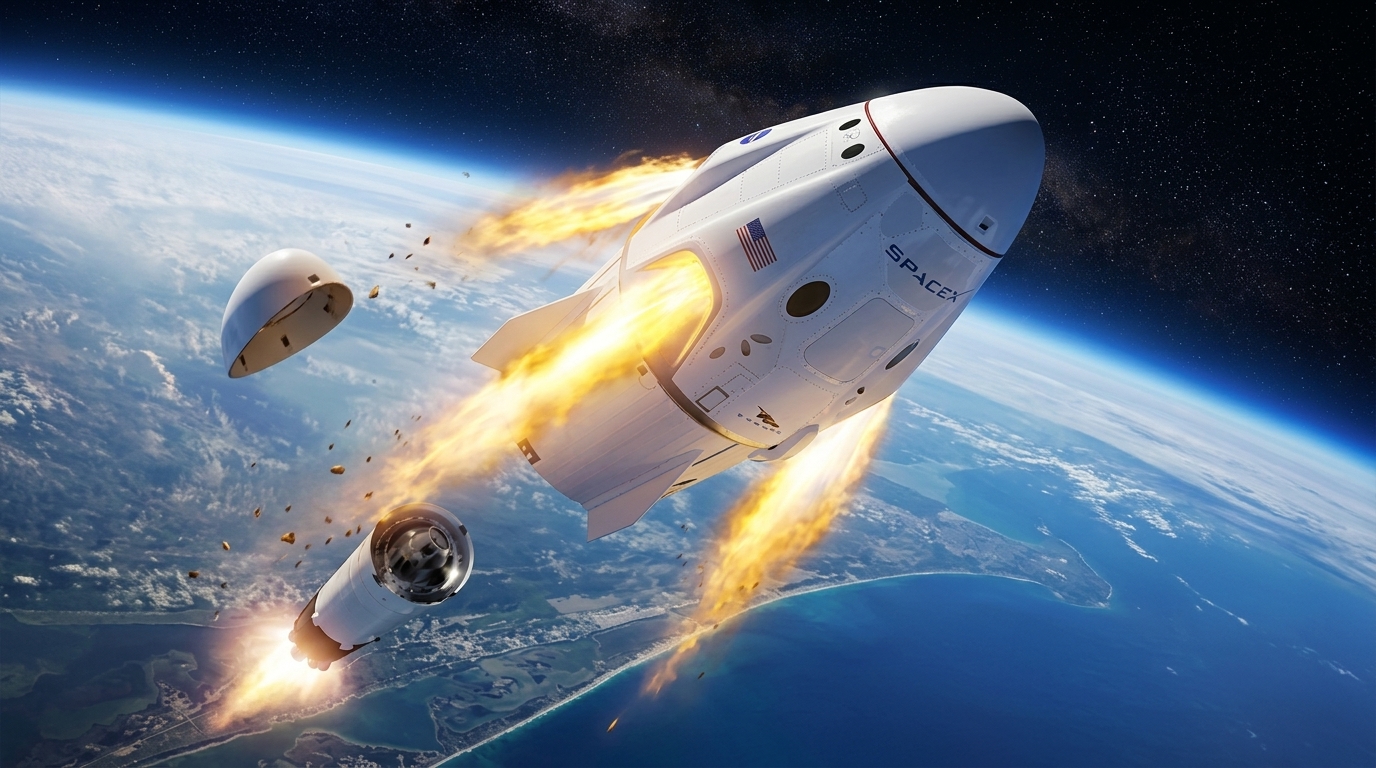
When most people think about SpaceX, they picture stainless steel Starship prototypes, towering Falcon 9 boosters, and fire-breathing Raptor engines. But the real magic that makes a 70-meter rocket land autonomously on a moving autonomous spaceport drone ship isn't just propulsion—it is software.
SpaceX revolutionized aerospace not by using ultra-expensive, radiation-hardened 1990s microchips, but by leveraging modern software engineering principles, commercial off-the-shelf (COTS) hardware, and relentless testing paradigms.
Whether you are building distributed web backends, microservices, or mission-critical cloud infrastructure, the architectural patterns SpaceX uses to fly rockets provide some of the best lessons in fault tolerance and resilient systems engineering.
The SpaceX Software Tech Stack: Overview
SpaceX uses a pragmatically layered technology stack. They do not reinvent wheels where standard tools suffice, but they enforce strict boundaries between real-time control, simulation, and user interfaces.
| Layer | Primary Technologies | Purpose |
|---|---|---|
| Flight Software (GNC) | C / C++ | Real-time Guidance, Navigation, and Control algorithms running on Falcon 9, Dragon, and Starship |
| Operating System | Custom Stripped-Down Linux | Deterministic execution with real-time kernel patches |
| Crew Dragon UI | Chromium, HTML5, CSS, Custom JS | Astronaut touchscreen display and telemetry visualization |
| Data Pipelines & Telemetry | Python, Rust, Go | Flight data telemetry parsing, mission analytics, and ground communications |
| Testing & Simulation | C++, Python | Hardware-in-the-Loop (HITL) and Software-in-the-Loop (SITL) simulators |
| Starlink Routing | Linux, C++, Custom Protocol | Inter-satellite laser optical links and phased array mesh routing |
1. The Flight Computer Architecture & Triple Modular Redundancy
Space environment is unforgiving. Cosmic rays and solar radiation frequently cause single-event upsets (SEUs)—bit-flips in RAM or CPU registers that can corrupt calculations.
Traditional aerospace programs solved this by buying specialized radiation-hardened processors (like the RAD750), which cost hundreds of thousands of dollars each and run at meager clock speeds (~133 MHz).
SpaceX took a radically different, software-first approach called Triple Modular Redundancy (TMR) powered by standard commercial dual-core x86 processors.
                  ┌──────────────────────┐
                  │ Sensor Inputs (IMU)  │
                  └──────────┬───────────┘
                             │
            ┌────────────────┼────────────────┐
            ▼                ▼                ▼
   ┌────────────────┐ ┌────────────────┐ ┌────────────────┐
   │ Flight Comp 1  │ │ Flight Comp 2  │ │ Flight Comp 3  │
   │  (Dual-Core)   │ │  (Dual-Core)   │ │  (Dual-Core)   │
   └────────┬───────┘ └────────┬───────┘ └────────┬───────┘
            │                  │                  │
            └────────────────┬─┴──────────────────┘
                             ▼
                 ┌───────────────────────┐
                 │ 2-out-of-3 Voting Bus │
                 └───────────┬───────────┘
                             ▼
                 ┌───────────────────────┐
                 │ Actuators / Thrusters │
                 └───────────────────────┘
How the 2-out-of-3 Voting System Works:
- Three Flight Computers: Each Falcon 9 and Dragon capsule runs 3 separate flight computers.
- Core Pair Verification: Each physical computer has two processor cores running identical calculations in lockstep. If the two cores disagree on a calculation, that computer marks itself as faulty.
- Byzantine Fault Consensus: The outputs of all three computers are broadcast onto a high-speed shared voting bus. The rocket's actuators (gimbal motors, cold gas thrusters, grid fins) only act on commands that receive at least a 2-out-of-3 majority consensus.
- Instant Reboot: If one computer experiences a cosmic ray bit-flip, the other two continue flying the rocket without interruption while the corrupted node reboots and resynchronizes state in milliseconds.
Key Takeaway for Engineers: Hardware will fail. Network packets will drop. Instead of searching for indestructible infrastructure, build deterministic systems where consensus and automated node recovery handle failure transparently.
2. Yes, Crew Dragon Touchscreens Run on Chromium and JavaScript
One of the most surprising facts about the Crew Dragon spacecraft is that its primary flight display interface is built with modern web technologies: Chromium, HTML5, CSS, and custom reactive JavaScript.
When Bob Behnken and Doug Hurley flew the Demo-2 mission, they controlled the vehicle through a sleek capacitive touchscreen instead of the hundreds of mechanical switches found on the Space Shuttle or Apollo capsules.
 ┌─────────────────────────────────────────────────────────┐
 │                   Crew Dragon Cockpit                   │
 │                                                         │
 │  ┌───────────────────────────────────────────────────┐  │
 │  │        Chromium Display Layer (HTML5 / CSS)       │  │
 │  │  - Render gauges, maps, flight trajectories       │  │
 │  │  - Responsive touch feedback & status displays    │  │
 │  └─────────────────────────▲─────────────────────────┘  │
 │                            │ Fast IPC / WebSockets      │
 │  ┌─────────────────────────▼─────────────────────────┐  │
 │  │           Real-Time Flight Computer (C++)         │  │
 │  │  - Autonomous Guidance, Navigation, Thrusters     │  │
 │  │  - Hardware safety interlocks & manual overrides  │  │
 │  └───────────────────────────────────────────────────┘  │
 └─────────────────────────────────────────────────────────┘
Why Web Technologies in Human Spaceflight?
- Rapid UI Iteration: Designing rich data visualizations, dynamic trajectory maps, and fluid animations is dramatically faster in modern CSS and JavaScript than in low-level graphics APIs.
- Strict Decoupling: The UI layer is purely a presentation and telemetry client. It does not calculate orbital mechanics or fire thrusters directly.
- Micro-Protocols for Communication: The web view communicates with the C++ flight computers via strict, typed binary protocols over local IPC / WebSockets.
- Physical Fallback: In the event of total screen failure, astronauts have mechanical buttons for critical abort and parachute deployment triggers.
3. Hardware-in-the-Loop (HITL) Simulation
SpaceX follows a core mantra: "Test what you fly, and fly what you test."
Because you cannot launch a multimillion-dollar rocket every time a developer merges a pull request, SpaceX maintains massive continuous integration test farms running Hardware-in-the-Loop (HITL) simulations.
// Mental Model: How HITL bridges physical hardware with virtual space
interface SimulationEngine {
  physics: OrbitalPhysicsModel
  virtualSensors: SimulatedIMUAndGPS
  targetHardware: FlightComputerNode[]
}

async function runFlightSimulation(flightCode: BinaryPayload) {
  const flightComputer = connectPhysicalFlightController(flightCode)

  while (simulationTime < ORBIT_INSERTION_TIME) {
    // 1. Feed real flight computer with simulated physical sensor telemetry
    const sensorReadings = physicsEngine.stepSensors(telemetryStep)
    flightComputer.feedSensors(sensorReadings)

    // 2. Capture physical actuator output signals from the real hardware
    const engineGimbalCommands = flightComputer.readActuatorOutputs()

    // 3. Apply output to virtual physics environment
    physicsEngine.applyForces(engineGimbalCommands)
  }
}
What makes HITL so powerful?
- Real flight computer boards are mounted in racks and connected to simulated sensor inputs (gyroscopes, star trackers, pressure transducers).
- The flight computers believe they are actively flying in microgravity, unaware that the physics inputs are coming from a high-fidelity simulator.
- Every commit, bugfix, or trajectory optimization is executed across hundreds of virtual flights with wind shears, engine anomalies, and sensor dropouts before touching an actual rocket.
4. Engineering Lessons Every Developer Can Apply
You don't need to build orbital rockets to benefit from SpaceX’s engineering principles:
1. Decouple Control Logic from the UI Layer
Never mix your business-critical state logic with UI rendering. By keeping the Crew Dragon touchscreen as a stateless telemetry and input shell communicating over clean APIs with autonomous backend services, they achieved rapid UI evolution without risking vehicle safety.
2. Design for Graceful Degradation & Healing
Instead of trying to eliminate every possible runtime anomaly with bloated defensive boilerplate, build systems that assume failure is inevitable. Implement circuit breakers, consensus health checks, and fast worker restarts.
3. Comprehensive Mocking of Hostile Environments
If your integration tests only test the happy path, your code will fail under production load. Simulate network timeouts, corrupted payloads, database failovers, and latency spikes in your CI/CD pipelines.
4. Simplicity is a Prerequisite for Reliability
As Elon Musk frequently emphasizes in SpaceX engineering reviews: "The best part is no part. The best process is no process." In code, every line you don't write has zero bugs and requires zero maintenance. Avoid premature micro-optimizations and unnecessary architectural bloat.
Conclusion
SpaceX's greatest software breakthrough wasn't an exotic new programming language—it was the disciplined application of fault-tolerant distributed architecture, triple modular redundancy, strict boundary isolation, and uncompromising simulation.
Next time you design a web application, distributed service, or mission-critical API, ask yourself: How would this system behave if a node vanished right now? Design for resilience from day one.